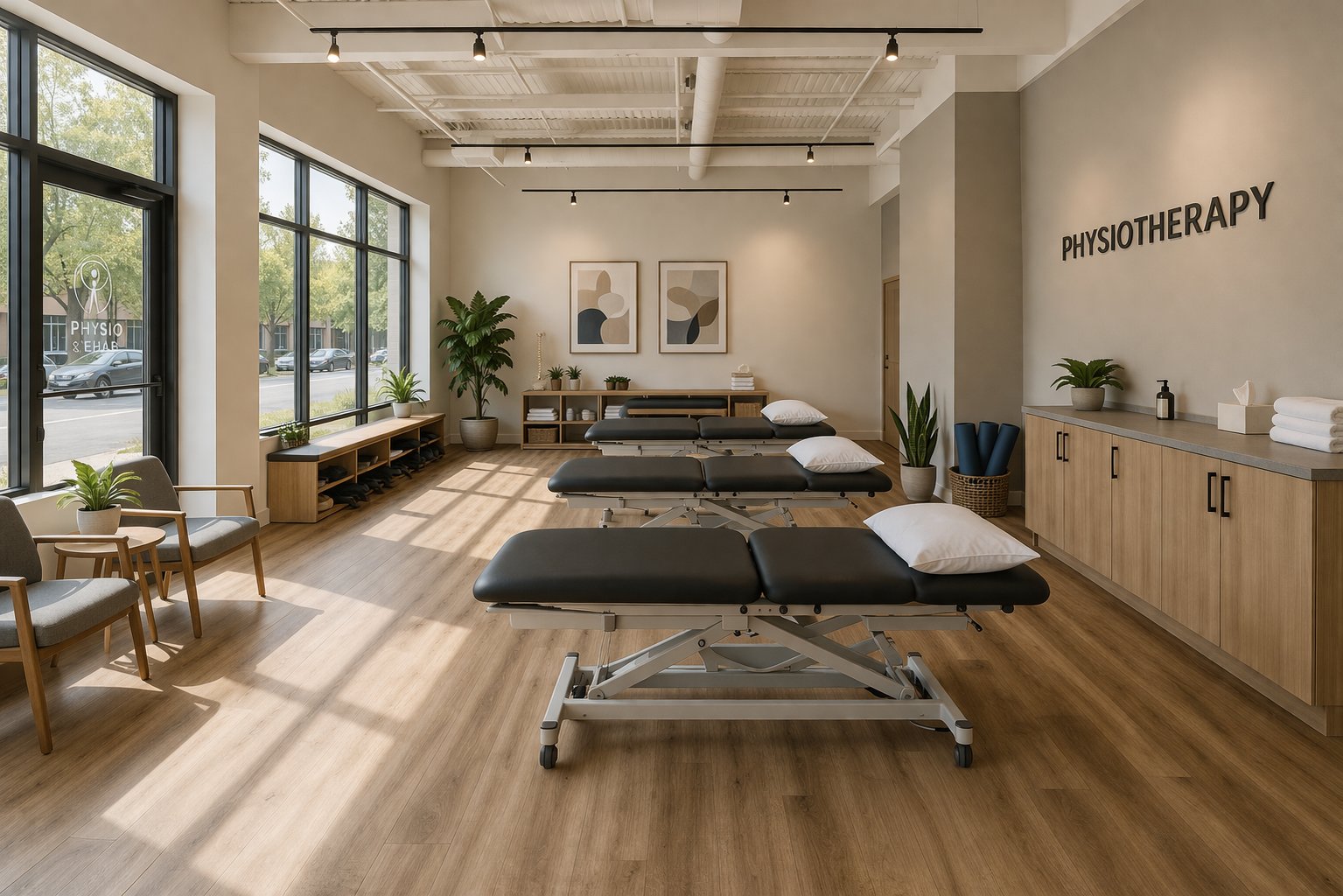
Who We Serve · Allied Health

Allied Health & Rehabilitation

Physiotherapy, chiropractic, occupational therapy, and the full allied-health field — space leased, bought, and built for how you actually treat, across Ontario and Alberta.

Discuss Your Space ← Who We Serve
PhysiotherapyChiropracticOccupational TherapyMassage Therapy (RMT)KinesiologyAthletic TherapyOsteopathyNaturopathyAcupuncturePodiatry & ChiropodySpeech-Language PathologyMultidisciplinary RehabPhysiotherapyChiropracticOccupational TherapyMassage Therapy (RMT)KinesiologyAthletic TherapyOsteopathyNaturopathyAcupuncturePodiatry & ChiropodySpeech-Language PathologyMultidisciplinary Rehab
Allied Health & Rehabilitation clinical real estate

A broker who reads a space the way you treat

Allied health and rehabilitation practices rarely fit the standard doctor's-office mould. Open treatment floors, private bays, equipment loads, hydrotherapy plumbing, and steady community access all pull a clinic's requirements away from generic commercial space — and most brokers never notice the difference.

Mya Qi, MPH understands the clinical and accessibility realities behind a physiotherapy, chiropractic, or multidisciplinary clinic before advising on the real estate that houses it. That shows up in site criteria that reflect how you actually deliver care, and in lease terms that protect the practice rather than constrain it.

PRAXIS serves allied health practitioners at every stage — from a first clinic to a multi-site network — across all Ontario and Alberta markets.

Programming

Space Built Around Treatment

Open gym and treatment-bay areas, private rooms, floor loading, and washroom count planned to match how your discipline actually works.

Site Selection

Access That Retains Patients

Ground-floor, barrier-free entry and close, accessible parking — the factors that keep patients with mobility limitations coming back.

Build-Out

Infrastructure Done Right

Hydrotherapy plumbing, acoustic separation, HVAC and electrical load, and imaging shielding where relevant — coordinated before the lease is signed.

Lease Strategy

Terms That Protect You

Permitted use, exclusivity, accessibility obligations, after-hours HVAC, and fixturing periods negotiated with clinical operations in mind.

Frequently asked — Allied Health & Rehabilitation real estate

You'll want to verify both the municipal zoning and the landlord's permitted-use clause allow a health or rehabilitation clinic, since one can permit the use while the other restricts it. A local real estate lawyer and, where needed, a planning consultant should confirm this before you commit.

It depends on your capital, growth plans, how long you intend to stay, and how much custom build-out you need. Leasing preserves flexibility and cash, while owning can build equity and give you full control over fit-out; a broker and your financial advisor can help you model the trade-offs.

Often yes — an exclusivity or restrictive-use clause can limit the landlord from leasing nearby space to a directly competing practice. The scope and enforceability vary, so the wording should be drafted and reviewed by your lawyer.

Allied health clinics generally need at-grade or barrier-free access, accessible washrooms, and circulation space that accommodates mobility devices, guided by applicable accessibility legislation and the building code. Confirm the specific obligations for your location early, since retrofitting later is costly.

Planning space for your allied health & rehabilitation practice?